
From “Trash” to Top-of-Mind: The Eco-Swag Revolution
In the promotional products world, the “throwaway” era is officially over.
Today’s consumers don’t just want a freebie; they want meaning. In fact, 62% prefer brands that use sustainable materials. If your swag ends up in a junk drawer (or worse, a landfill), it’s not just wasted budget. It’s a missed opportunity and a hit to your brand equity.
The brands winning in 2025 and beyond aren’t louder- they’re smarter. They’re choosing materials and products that people actually use, keep, and talk about.
Ready to level up your next campaign? Let’s break down the eco-friendly materials that are actually moving the needle, and how to use them strategically.
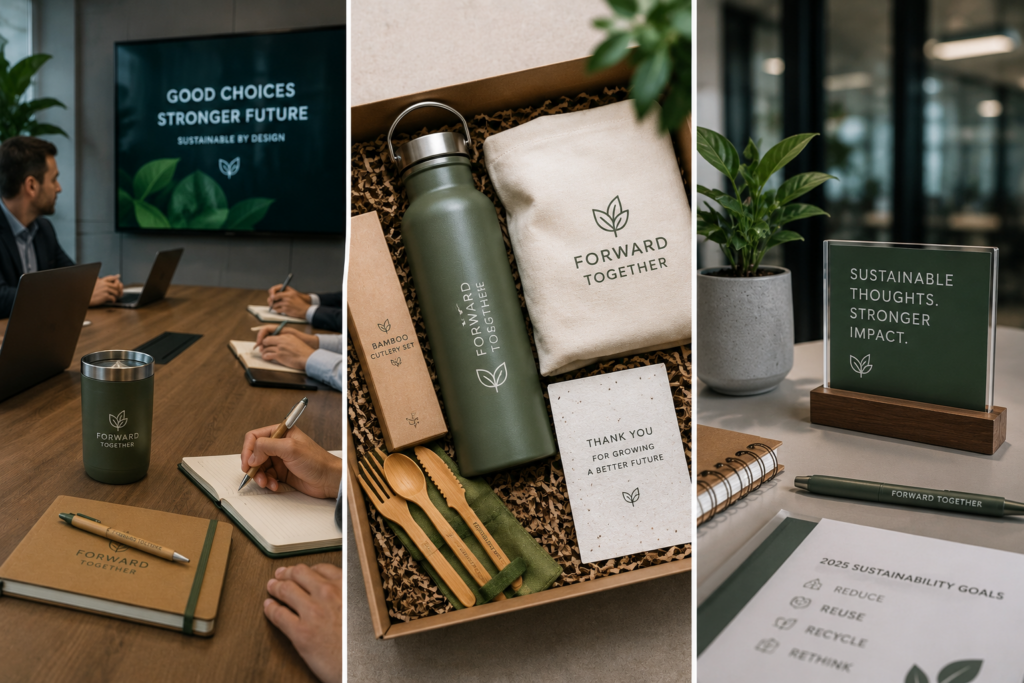
The Materials That Matter (and Why They Work)
RPET (Recycled Polyester): Turning Waste into Walking Billboards
RPET is one of the most impactful shifts in modern merch. Made from recycled plastic bottles, it gives waste a second life in the form of high-quality, durable products.
Think custom tote bags, backpacks, and tech organizers—items people use daily. These aren’t giveaways; they’re mobile brand assets. Every time someone carries your RPET bag, your brand travels with them.
Why it works:
High utility + sustainability = long-term visibility.
Bamboo & Wheat Straw: Everyday Upgrades with a Story
Fast-growing, low-impact, and surprisingly versatile, bamboo and wheat straw are replacing plastic across everyday essentials.
From travel kits and cutlery sets to pens and desk accessories, these materials instantly elevate the perceived value of your merch. They feel intentional—and they spark conversation.
Why it works:
They look different, feel premium, and signal conscious decision-making.
Organic Cotton: Apparel People Actually Want to Wear
Let’s be honest—most branded apparel never leaves the house.
Organic cotton changes that. Softer, higher-quality, and free from synthetic pesticides, it delivers a premium feel that people genuinely enjoy wearing. Hoodies, tees, and tote bags made from organic cotton become wardrobe staples—not afterthoughts.
Why it works:
Comfort drives repeat use. Repeat use drives brand recall.
Plantable Seed Paper: Zero Waste, Maximum Impact
If you want memorable, this is it.
Plantable seed paper transforms traditional items—business cards, event badges, bookmarks—into something interactive. Instead of throwing it away, recipients plant it and watch it grow into herbs or wildflowers.
It’s not just swag—it’s an experience.
Why it works:
It creates a moment. And moments are what people remember.
Recycled Aluminum & Glass: Elevated, Long-Term Gifting
For premium campaigns or corporate gifting, recycled aluminum and glass offer a sleek, durable alternative to plastic.
Water bottles, tumblers, and barware made from these materials don’t just last—they live in someone’s daily routine. On desks, in gyms, at home—they keep your brand front and center for years.
Why it works:
Longevity + design = sustained brand presence.
Going Deeper: What Makes a Material “Sustainable”?
Modern eco-friendly materials are defined by their ability to be renewed, recycled, or biodegraded. The goal is simple: reduce reliance on fossil fuels, minimize landfill waste, and lower carbon emissions across a product’s lifecycle.
Here’s a closer look at the categories shaping the future of branded merchandise:
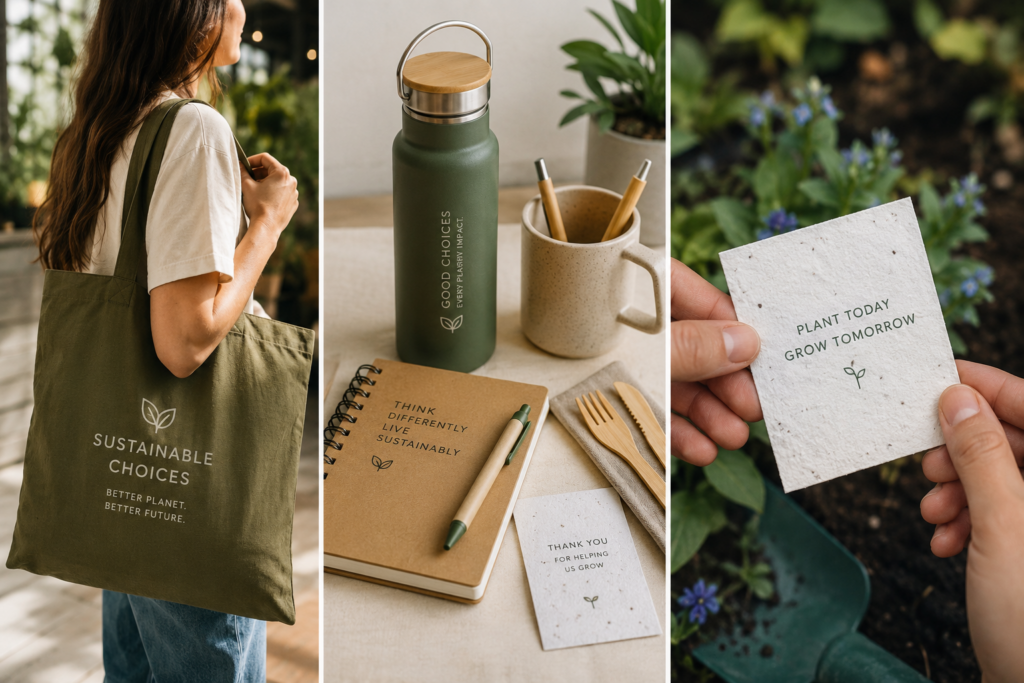
Renewable Natural Materials
These materials come from sources that replenish quickly and require fewer resources to produce.
- Bamboo: One of the fastest-growing plants on Earth, known for high CO₂ absorption and versatility across products.
- Cork: Harvested without harming the tree, making it both renewable and biodegradable.
- Hemp: Durable, soil-enriching, and incredibly versatile—from textiles to construction.
- Organic Cotton: Grown without harmful chemicals, making it safer for both people and the planet.
Recycled & Upcycled Materials
Recycling dramatically reduces energy use and eliminates the need for raw material extraction.
- Recycled Aluminum: Uses up to 95% less energy than new production and can be recycled indefinitely.
- Recycled Polyester (rPET): A staple in bags and apparel, made from post-consumer plastic.
- Recycled Paper & Cardboard: Essential for sustainable packaging and print materials.
- Reclaimed Wood: Gives existing materials a second life while adding character and story.
Innovative Bio-Materials
The next wave of sustainability is being driven by innovation—materials designed to perform like plastic but break down naturally.
- PLA & PHA Bioplastics: Derived from plant starches or microorganisms, often compostable in industrial facilities.
- Mushroom Mycelium: A biodegradable alternative to foam packaging and even leather.
- Seaweed-Based Plastics: Marine-safe, biodegradable, and rapidly renewable.
The Business Case for Eco-Swag
This isn’t just about being “green.” It’s about being effective.
- 85% of people keep useful promo items for over a year
- Sustainable products drive higher brand perception
- Quality materials lead to more frequent use and visibility
When you choose better materials, you’re not just reducing waste—you’re increasing ROI.
From Clutter to Connection
The real shift happening in branded merchandise isn’t just about materials—it’s about mindset.
Old approach:
Give away as much as possible, as cheaply as possible.
New approach:
Give away something worth keeping.
Because the best swag doesn’t get thrown out.
It gets used.
It gets noticed.
It gets remembered.
The Bottom Line
Eco-friendly swag isn’t a trend—it’s the new standard.
Brands that embrace it aren’t just reducing their environmental footprint—they’re creating stronger, longer-lasting connections with their audience.
So the next time you’re planning a campaign, ask yourself:
Is this something people will keep—or something they’ll toss?
Because the difference between “trash” and top-of-mind…
is the story your product tells.
Stop giving away clutter. Start giving away a story.